
- Home
- Solution
Challenge We Tackle
Smart Solutions
Industries Cover
We have Daynamic Team Members that Easily Problem Solve.
Let’s Talk Let’s Talk
- Company
- News & Insight
- Contact Us

Our Support

I’ll be honest — I wasted my first three months trying to learn digital marketing. I watched random YouTube videos, bookmarked 47 blog posts I never re-read, and signed up for six free courses I never finished. I was busy. I felt productive. But I couldn’t run a single Google Ads campaign or rank a page on search.
Sound familiar? You’re not alone. The biggest problem with learning digital marketing isn’t a lack of resources. It’s the opposite — there’s too much out there, and nobody tells you what to learn first, what to skip, and when to stop consuming and start doing.
That realisation changed everything for me. Once I switched from passive learning to hands-on practice — running real ads, building a WordPress site, and managing actual social media accounts — things clicked in weeks, not months. Today, I work with clients across India and earn more than most of my engineering friends.
This guide is the roadmap I wish I had on day one. I’ll rank the best ways to learn digital marketing, give you a month-by-month plan, and explain how AI has completely changed the learning curve in 2026.
Before we talk about how to learn, let’s talk about why. Because if you’re going to invest 4–6 months of your life into a new skill, you deserve to know the payoff.
Watch: Digital Marketing Full Course for Beginners 2026
India’s digital advertising market is projected to surpass ₹75,000 crore by the end of 2026. Every business — from a two-person chai brand to a Fortune 500 company — needs someone who can run ads, rank on Google, create content, and convert followers into customers. That someone could be you.
Here’s what makes digital marketing uniquely powerful compared to other career skills. First, you don’t need a degree — no one asks for a B.Tech or MBA before hiring a social media manager. Second, you can freelance from anywhere — I know people in Suriya, Jharkhand who manage accounts for brands in Mumbai and Dubai from their homes. Third, the barrier to entry is low, but the earning ceiling is high — entry-level roles start at ₹2–4 LPA, and experienced specialists clear ₹10–25 LPA or ₹1–5 lakh/month as freelancers.
According to LinkedIn’s workforce data, digital marketing is among the top 10 most in-demand skills globally. The demand isn’t slowing down. It’s accelerating — especially with AI creating entirely new sub-fields like Generative Engine Optimization.
There’s no single “right” way to learn digital marketing from scratch. But some methods are dramatically more effective than others. Here’s my honest ranking, based on what actually worked for me and for hundreds of students I’ve seen go through the process.
Effectiveness: ★★★★★ — This is my #1 recommendation, and I’ll tell you exactly why.
When I finally joined a structured, hands-on training programme, my progress in one month outpaced everything I’d taught myself in six. The reason is simple: you learn by doing, not by watching someone else do it. A good institute forces you to create real campaigns, spend real ad budgets, optimise real websites, and build a real portfolio — all under expert guidance.
The complete digital marketing course at SDMI (Suriya Digital Marketing Institute) is a perfect example. Based in Suriya, Jharkhand, SDMI offers 100% practical, classroom-based training with live projects, real ad campaigns, small batches of under 15 students, and personal mentorship. Their curriculum covers 15+ modules including SEO, Google Ads, Meta Ads, WordPress, content marketing, AI tools, e-commerce, and freelancing — everything you need in 2026.
What separates a great institute from a mediocre one is practicals. If you’re sitting through PowerPoint slides for three months, you’re wasting money. If you’re running Google Ads by week two, building a WordPress site by week three, and managing a live client’s social media by month two — that’s the best digital marketing course for beginners. SDMI does exactly that. You can learn more about their approach here.
Effectiveness: ★★★★☆ — The best free starting point, bar none.
Google Digital Garage offers a free “Fundamentals of Digital Marketing” course with 26 modules and a certification from Google itself. It covers search, display advertising, analytics, email marketing, and social media basics. It’s excellent for building a conceptual foundation before diving into hands-on work.
The Google Ads certification and Google Analytics certification are also free and carry real weight on your resume. I completed all three before joining a formal course, and it gave me a massive head start. The limitation? These are self-paced, purely theoretical, and don’t include live projects. Think of them as the textbook — you still need the lab.
Effectiveness: ★★★½☆ — Incredible if you’re disciplined. Useless if you just “watch.”
YouTube has world-class digital marketing content for free. Channels like Ahrefs, Neil Patel, Simplilearn, WsCube Tech, and Semrush Academy publish tutorials that rival ₹50,000 paid courses. The problem isn’t the quality of content — it’s the lack of structure and accountability.
My rule: never watch a tutorial without immediately practising what it teaches. Watched a video on keyword research? Open Google Keyword Planner right now and find 20 keywords for a niche you care about. That single habit separates people who learn digital marketing from people who just collect bookmarks.
Effectiveness: ★★★☆☆ — Good for specific deep dives, not for end-to-end learning.
Platforms like Coursera (Google Digital Marketing & E-commerce Certificate), Udemy (₹399–₹1,999 sales), and HubSpot Academy (free inbound marketing and content certifications) offer structured, module-based learning. These are great for mastering specific topics — say, advanced Google Analytics or email automation — after you’ve got the fundamentals down.
The limitation is identical to YouTube: no live projects, no real-time feedback, and extremely easy to abandon halfway through. Completion rates on Udemy hover around 10–15%. If you’re a self-starter with iron discipline, these work. If you’re not, combine them with a formal course or mentorship.
Effectiveness: ★★★★☆ — The fastest way to learn after you know the basics.
Nothing teaches you faster than having skin in the game. Start a blog on WordPress. Launch an Instagram page about a topic you love. Run a ₹500 Facebook Ads campaign for a local friend’s business. Create a YouTube channel. Build a niche affiliate site.
I started a food blog when I was learning. It was terrible. The writing was awkward, the SEO was wrong, and the design looked like it was built in 2008. But within three months, I had learned WordPress, basic SEO, content writing, Google Analytics, and social media scheduling — all because I had a project that forced me to figure things out. If you want to learn digital marketing step by step, building something real is the most effective accelerator.
Effectiveness: ★★★★☆ — Best for getting paid to learn.
Agencies handle multiple clients across industries. As an intern, you get exposed to SEO, paid ads, social media, content, email, and analytics all at once — often within your first week. The learning curve is steep, but that’s exactly the point.
SDMI includes an internship component within their course, which means you get structured learning and agency exposure without having to choose between them. That combination is hard to beat. If you can’t join an institute, cold-email 10 agencies in your city offering to work for free for 2 months. You’ll learn more in those 60 days than in six months of self-study.
Effectiveness: ★★★☆☆ — Game-changing supplement, but not a standalone method.
This is the newest approach, and it’s genuinely powerful. In 2026, you can ask ChatGPT to explain Google Ads Quality Score like you’re 10 years old, have Claude generate a sample SEO audit report for you to study, or use Gemini to quiz you on digital marketing concepts. AI tools make personalised, on-demand tutoring available to everyone — for free.
I use AI daily for learning new things. When Meta changes its ad algorithm, I ask ChatGPT to summarise the changes and suggest how to adapt. When I encounter a new GA4 report I don’t understand, I paste a screenshot into Claude and ask it to explain. The caveat: AI can explain theory beautifully, but it can’t give you the muscle memory of running real campaigns. Use it as a tutor, not a replacement for practice.
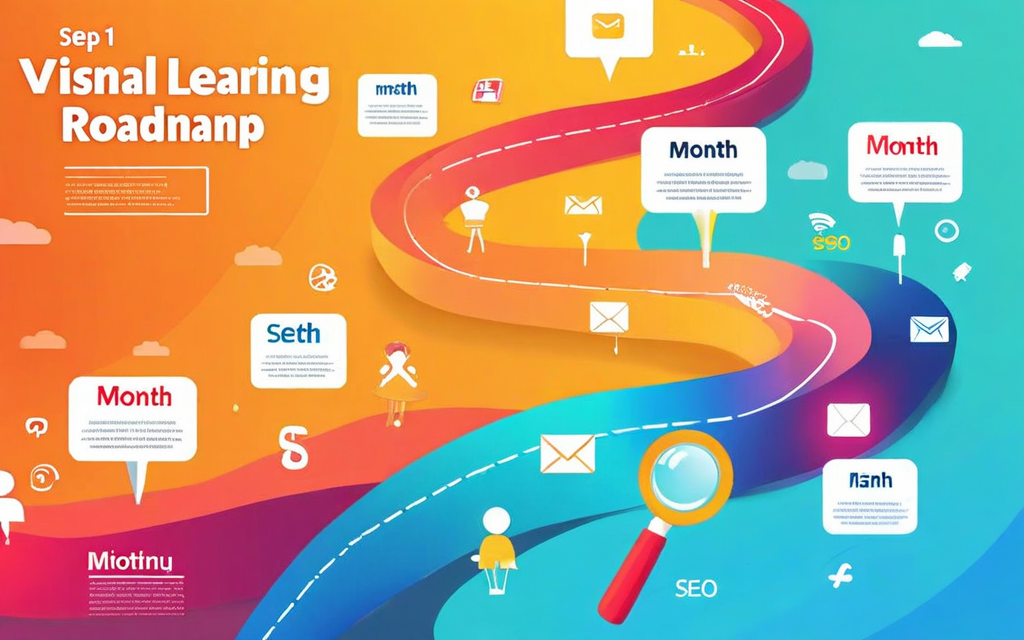
If I had to start over today, here’s the exact 6-month digital marketing learning path I’d follow. This works whether you’re self-taught, enrolled in a course, or doing a mix of both.
This roadmap is exactly what institutes like SDMI compress into their 4–6 month programmes — except they add live client projects, mentorship, and certifications on top. If you want the structured version with expert guidance, check SDMI’s programme details and pricing here.
You don’t need to master 50 tools. You need to be good with 15. Here are the ones that actually matter for beginners and working professionals in 2026.

| Category | Tool | Free or Paid? | What It Does |
|---|---|---|---|
| SEO | Google Search Console | Free | Monitor your site’s search performance, indexing, errors |
| SEO | Ubersuggest / Ahrefs | Freemium / Paid | Keyword research, competitor analysis, backlink tracking |
| Analytics | Google Analytics 4 (GA4) | Free | Website traffic, user behaviour, conversion tracking |
| Paid Ads | Google Ads | Pay-per-click | Search, display, YouTube, Shopping ad campaigns |
| Paid Ads | Meta Business Suite | Pay-per-click | Facebook & Instagram ads, audience targeting, retargeting |
| Website | WordPress + Elementor | Free (hosting paid) | Build and manage websites without coding |
| Design | Canva | Freemium | Social media graphics, presentations, video editing |
| Video | CapCut | Free | Short-form video editing for Reels, Shorts, TikTok |
| Mailchimp | Free (up to 500 contacts) | Email campaigns, automation, landing pages | |
| CRM | HubSpot CRM | Free tier | Lead management, pipeline tracking, email sequences |
| AI Content | ChatGPT / Claude | Free + Paid tiers | Content drafting, brainstorming, research, copywriting |
| AI Design | Canva AI / MidJourney | Freemium / Paid | AI-generated visuals, brand graphics, social assets |
| Social Scheduling | Buffer / Later | Freemium | Schedule and manage social media posts across platforms |
| Automation | Zapier | Freemium | Connect tools, automate repetitive workflows |
SDMI’s course includes hands-on training with all of the major tools listed above. Students get to use real Google Ads dashboards, Meta Ads Manager, WordPress, Search Console, and AI tools during live projects. They also offer a dedicated web development and design module for those who want to go deeper into website building.
I’ve made every mistake on this list. Learn from my failures so you don’t repeat them.
Mistake 1: Consuming without doing. Watching 200 hours of tutorials without ever creating a single campaign teaches you nothing. After every 30 minutes of learning, spend 60 minutes practising. That’s the golden ratio.
Mistake 2: Trying to learn everything at once. SEO, Google Ads, social media, email, video, analytics — it’s overwhelming. Follow the month-by-month roadmap above and focus on one area at a time. Mastery beats surface-level familiarity every time.
Mistake 3: Ignoring analytics. If you can’t read a Google Analytics dashboard, you’re guessing — not marketing. Make analytics a daily habit from day one. Numbers tell you what’s working and what’s burning money.
Mistake 4: Skipping the portfolio. Certifications look nice, but clients and employers want proof. Before you finish learning, build a portfolio website showcasing real campaigns, traffic growth screenshots, ad performance data, and content samples. This single step puts you ahead of 80% of beginners.
Mistake 5: Not learning AI tools. In 2026, refusing to use AI is like refusing to use a calculator. It doesn’t make you more skilled — it makes you slower. Learn to use AI tools for content drafting, research, competitor analysis, and reporting. The marketer who pairs AI efficiency with human creativity wins every time.
Mistake 6: Choosing based on fees alone. The cheapest course isn’t always the best value, and the most expensive one isn’t always the best quality. Evaluate based on practical training, batch size, trainer expertise, live projects, and placement support — not just the price tag. That’s why SDMI’s practical approach in Suriya delivers better outcomes than many institutes charging 3–4x more.
If you started learning digital marketing even two years ago, your curriculum would look very different from what’s required today. AI hasn’t just added new tools — it’s created entirely new disciplines.

GEO is the practice of optimising your content so that AI-powered search engines — Google AI Overviews, ChatGPT, Perplexity, Claude — cite it in their responses. Traditional SEO focused on ranking #1 on a blue-link results page. GEO focuses on being the source that AI models reference when they answer user questions.
This means writing with clear, authoritative entity descriptions, structured FAQ schemas, and direct factual statements. If your content is vague, unstructured, or lacks specificity, AI engines will skip it entirely. The digital marketing skills you need in 2026 now include understanding how LLMs (large language models) crawl, process, and cite content.
Google’s Performance Max, Meta’s Advantage+, and LinkedIn’s AI-assisted campaigns all use machine learning to optimise bidding, targeting, and creative in real time. You don’t need to become an AI engineer. But you do need to understand how to set objectives, interpret AI recommendations, and intervene when the algorithm makes the wrong call.
AI can draft a 2,000-word blog post in 30 seconds. That’s not the skill. The skill is knowing how to prompt effectively, edit AI output for accuracy and tone, add original insights, and ensure the final piece actually serves the reader. In 2026, “AI-assisted content strategist” is a real, high-paying job title.
Any course that doesn’t teach AI tools, GEO, and LLM optimization is preparing you for 2021, not 2026. SDMI’s curriculum includes dedicated modules on AI tools for marketing and generative engine optimization — which is one reason it’s ranked among the best digital marketing courses for beginners in Jharkhand.
What is the best way to learn digital marketing for beginners?
The best way to learn digital marketing as a beginner is to combine structured classroom training with immediate hands-on practice. Start with Google’s free certifications for foundational concepts, then join a practical institute like SDMI where you work on live projects, real ad campaigns, and build a portfolio. Supplement with YouTube tutorials and AI tools for on-demand learning.
Can I learn digital marketing for free?
Yes, you can learn digital marketing basics for free using Google Digital Garage, HubSpot Academy, YouTube tutorials, and AI tutors like ChatGPT. However, free resources lack live projects, personalised feedback, mentorship, and placement support. For career-ready skills and a professional portfolio, investing in a practical training course delivers significantly better results.
How long does it take to learn digital marketing?
Learning the fundamentals of digital marketing takes 1–2 months. Becoming job-ready with practical skills across SEO, paid ads, social media, and analytics takes 4–6 months of structured training. Mastering specialised areas like performance marketing or SEO can take 1–2 years of continuous practice. SDMI’s comprehensive course is designed to make you job-ready in 4–6 months.
Is digital marketing a good career in India in 2026?
Digital marketing is one of the best career choices in India in 2026. The industry is growing at over 25% annually, with 15,000+ job openings on major portals at any given time. Entry-level salaries start at ₹2–4 LPA, mid-level roles pay ₹5–12 LPA, and senior specialists or freelancers can earn ₹15–35 LPA or more. Remote work opportunities allow you to serve national and international clients from any location.
Do I need a degree to learn digital marketing?
No, you do not need a formal degree to learn or work in digital marketing. It is a skill-based field where employers and clients value practical ability, certifications, and portfolio work over academic qualifications. Students after 10th, 12th, graduates, housewives, and working professionals can all build successful digital marketing careers.
What is GEO (Generative Engine Optimization)?
GEO stands for Generative Engine Optimization. It is the practice of optimising web content so that AI-powered search engines — such as Google AI Overviews, ChatGPT, Perplexity, and Claude — accurately reference and cite it in their generated responses. GEO involves writing entity-rich, structured, authoritative content with schema markup and clear factual statements. It is considered the next evolution of traditional SEO and is an essential digital marketing skill in 2026.
You now have the complete picture: the 7 best learning methods ranked, a 6-month roadmap, the tools you need, the mistakes to avoid, and the AI trends reshaping the field. All that’s left is action.
Here’s your game plan, depending on where you are right now:
Ready to learn digital marketing the right way?
SDMI offers 100% practical, classroom-based training with live projects, mentorship, and certifications in Suriya, Jharkhand.
📞 Call/WhatsApp: +91-99316-99177
📧 Email: sdmiagency@gmail.com
Two years from now, you’ll either be glad you started today — or you’ll still be bookmarking blog posts about learning digital marketing. I know which one I’m betting on for you.
Go build something.